
In 1964 a woman named Kitty Genovese was raped and brutaly murdered outside of her apartment building. According to police reports, 38 people had either seen or heard what was happening to her, but did nothing. When hearing about stories like this, we often tell ourselves that we would have acted differently, yet with all the pain and suffering going on in the world at large and even in our own neighborhoods we often lack the will to act. We face a commodification of sympathy and a deficit of empathy. Do we even have the time to care if it is not rooted in our self interest?
When we are required to look directly at suffering, most of us retreat. The truth is that sympathy is not infinite. Psychologists describe this as “compassion fatigue” , the exhaustion that sets in when we are bombarded with stories of violence, poverty, or disaster. Faced with constant need, we ration our attention. We scroll past an image of starving children or a video of police brutality and tell ourselves we care, but then move on to the next notification.
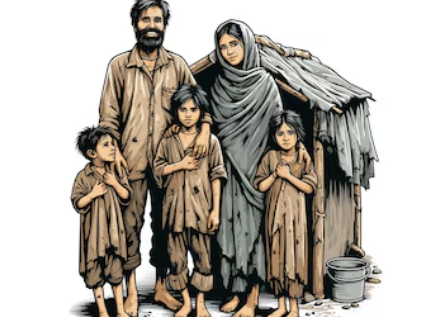
Our empathy shrinks, not because the suffering is less urgent, but because it is easier for us not to feel it. This avoidance also plays out closer to home. In Mumbai, begging children knock on car windows, and the instinct is to avert our eyes. We often justify inaction by questioning whether the money will actually help. Even charity is often a way of insulating ourselves. Clicking “donate” to earthquake relief is cleaner and safer than standing outside the BMC office demanding accountability.
Our lack of empathy is also rooted in the concept of the “other”. Whether it is our ethnic group, our nationality, our religion, or even our gender, we often segregate people based on whether they belong. The rise of anti-immigration around the world, especially in Europe, has an aesthetic dimension. From the color of our skin, to the clothes we wear, it is easy to view certain groups as threats to the social fabric. For historical reasons, going back over a thousand years, Muslims are seen as a threat to European values and beliefs. It seemed that Europe had turned over a new leaf by accepting refugees from war-torn countries in the mid 2010s. Many of those wars had its origins in European colonialism and the post colonial context.
However, this push towards multiculturalism has failed due in part to a lack of assimilation by immigrant communities, but mostly due to the demonization of entire communities for the negative actions of a few. Whether it is stories of Pakistani rape gangs in the UK or the rise of migrant organized crime in Sweden, people are losing their patience with open-door government policies. The notion of the out-group leads us to dehumanize and fall trap to the propaganda. Our feelings become weaponized against empathy.
We prefer empathy at a distance, stripped of risk or discomfort. Selective sympathy makes the problem worse. We care intensely about Ukraine because it dominates headlines, but ignore Sudan’s civil war. We are quick to claim empathy in theory, but in practice we avoid anything that threatens our comfort, our schedules, or our social standing. Care a little. Care a lot. Just care meaningfully.